


Autism Doesn’t Need to Be Healed
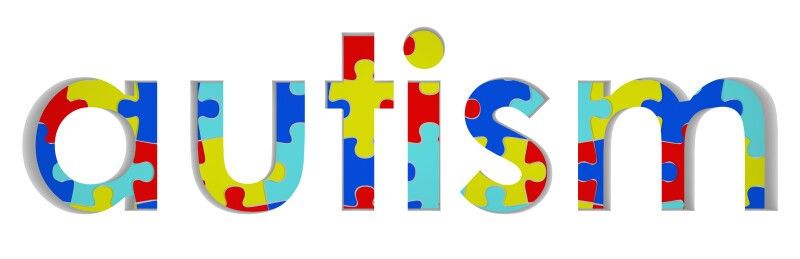
Every generation of Christians faces the challenge of seeing people the way God sees them, rather than the way culture labels them. Autism is one of those challenges today. Too often it is described as a disease to be “cured,” a burden to be “lifted,” or a tragedy to be “overcome.” But when we look at autism through the lenses of Scripture, creation, and redemption, we discover something radically different: autism does not reveal a defect to be healed. It reveals an untraveled path in the neurological landscape God has designed.
Autism as Neurodivergence
Autism is not a malfunction of the human brain. It is a form of neurodivergence—a way of processing, perceiving, and engaging with the world that differs from what we call “neurotypical.” To be neurodivergent is not to be “less human,” but to be a different expression of the same imago Dei. The Body of Christ is not built on sameness but on diversity. Just as the eye is not the ear, and the hand is not the foot, so the autistic mind is not the neurotypical mind. Yet both are vital.
When society says autism is “broken,” it reveals more about our limited categories than about God’s design. We want efficiency, conformity, and predictability. God wants truth, faithfulness, and glory through variety.
The Untapped Potential of the Human Mind
Every human brain is filled with astonishing potential, most of which we never access. We can’t comprehend the full measure of what God wove into our minds when He made us in His image. Even our brightest minds—Newton, Mozart, Einstein—barely scratched the surface of human capacity.
This means that “normal” is not the peak of human design. “Normal” is just one well-worn trail across a much larger terrain. Autism is not a wrong turn off the map; it is a different route that explores areas most of us never see. Traits like intense focus, pattern recognition, or sensory sensitivity are not malfunctions but demonstrations of the brain walking down paths we usually ignore.
Eden and the Original Design
Consider Adam in the garden of Eden. He was given the monumental task of naming the animals, stewarding creation, and exercising dominion over the earth. Did Adam have access to every possible neurological pathway needed to complete every future task? Or did God, in His providence, design humanity so that over generations, children would be born with unique wiring fit for unique challenges?
Both possibilities point to the same truth: autism is not a cosmic accident. It is not evidence of sin’s curse upon the mind. Rather, it reflects God’s creative purpose in filling the earth with different gifts and perspectives. Autism shows us what it looks like when God places a new tool in the toolbox of humanity. It may not fit every job, but it was never meant to.
A Different Lens, Not a Broken One
Autism reframes the way a person experiences the world. It often allows someone to notice what others miss, to persevere where others give up, or to see patterns that others cannot connect. To call this a “disorder” is like calling an x-ray machine broken because it doesn’t capture color photographs. It was designed to reveal what others cannot see.
Yes, autism can bring real challenges. Social difficulties, sensory overload, and communication barriers are often part of the experience. But challenges do not erase design. Every member of the Body of Christ carries both strengths and weaknesses. The calling of the Church is not to erase those differences but to disciple them into Christ’s service.
The Church’s Responsibility
Paul reminds us that “the eye cannot say to the hand, ‘I have no need of you.’” The same is true of the neurotypical church toward the autistic believer. Autism is not a part of the Body to be amputated, pitied, or hidden away. It is a gift to be cultivated.
The Church must resist the temptation to pray away autism as though it were leprosy. Healing, biblically, is the restoration of God’s design—not the erasure of it. When Jesus healed the blind, the deaf, and the lame, He was restoring what had been broken by the Fall. Autism is not the same. It does not mark the absence of God’s design but the presence of a different kind of wiring. To “heal” autism would be to erase part of the diversity God deliberately gave His Body.
Embracing the Untraveled Path
What autism reveals is not a defect but an untraveled path on the neurological map. When we walk with autistic brothers and sisters, we are invited to explore perspectives we never would have discovered on our own. When we disciple and empower them, we often find solutions to problems that stump the rest of us.
Autism doesn’t need to be healed. It needs to be understood. It needs to be welcomed into the Body as indispensable. It needs to be discipled into maturity, just like every other gift God gives His Church.
Autism is not a tragedy. It is not a defect. It is a testimony of God’s creativity.To see autism as a disease is to insult the Designer. To see it as a gift is to honor Him.


Comments